Clear Aligners vs. Braces: Which Path to a Perfect Smile is Right for You?
When deciding to transform your smile, the two most popular options are traditional orthodontic braces and modern clear aligners. Both systems can create excellent, long-lasting clinical results. However, the experience of wearing them is entirely different.
Choosing the right option isn't just about how they look; it depends heavily on your bite complexity, lifestyle preferences, and how consistently you can follow a treatment plan. Let’s break down the practical differences to help you make an informed choice.
1. Visibility and Aesthetics
Traditional Braces: Highly visible metal or ceramic brackets bonded directly to the teeth, connected by wires. While ceramic options blend in better, they are still noticeable.
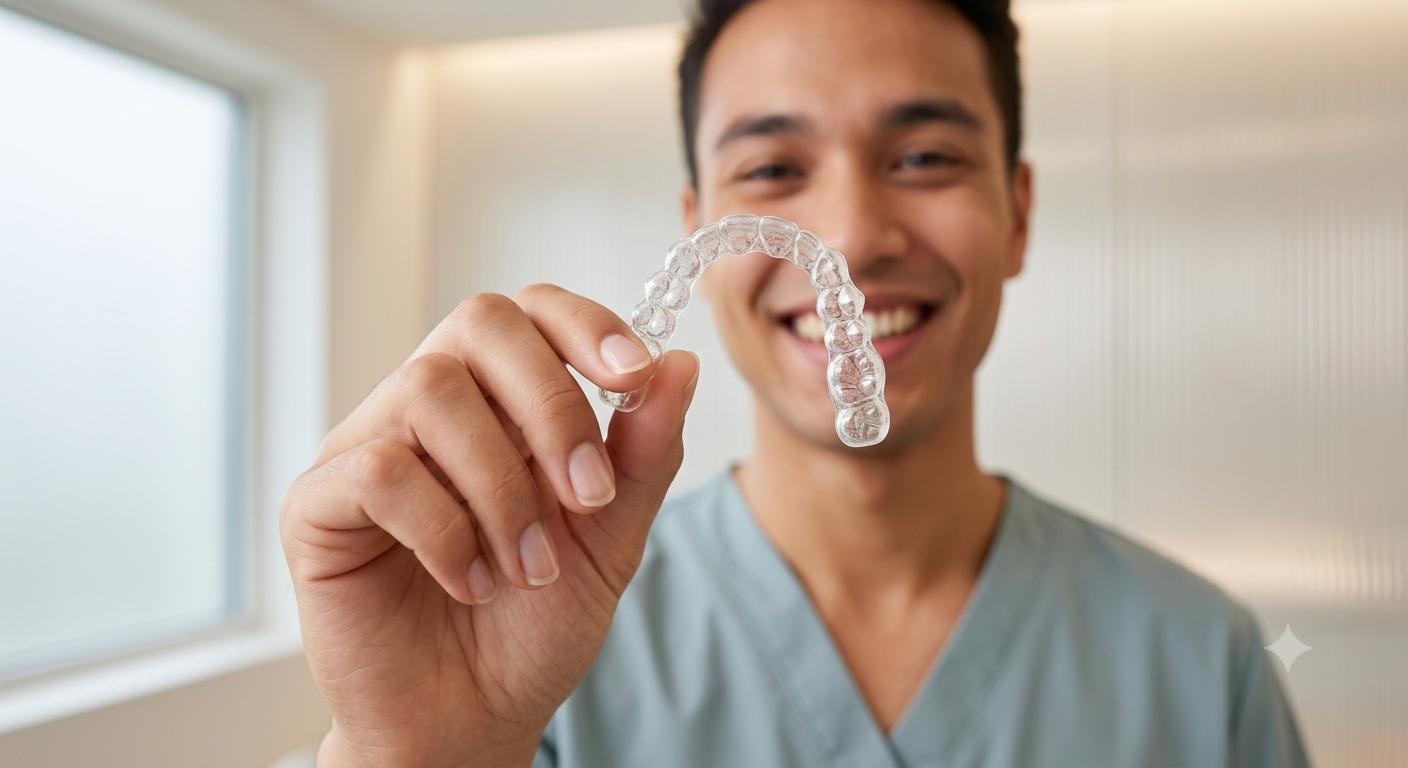
Clear Aligners: Virtually invisible medical-grade clear plastic trays custom-molded to your teeth. For patients who want to maintain a professional or mature aesthetic without advertising their orthodontic treatment, aligners are the gold standard.
2. Lifestyle Fit and Dietary Restrictions
Traditional Braces: Fixed permanently to your teeth. You must avoid hard, sticky, or chewy foods (like popcorn, nuts, and caramel) that can break the brackets. Cleaning requires specialized threaders to get plaque out from under the wires.
Clear Aligners: Completely removable. When it’s time to eat, drink anything other than water, brush, or floss, you simply take the trays out. There are zero dietary restrictions, and keeping your teeth clean is as easy as it was before treatment.
3. Comfort and Daily Wear
Traditional Braces: Metal brackets can cause initial irritation, scrapes, or sores on the inside of the cheeks and lips. Periodic adjustments at the clinic can also cause significant generalized soreness.
Clear Aligners: Smooth, low-profile plastic trays that sit perfectly against the gumline, significantly reducing soft tissue irritation. While there is minor pressure when starting a new tray step, it is generally much gentler than wire tightening.
4. Predictability and Doctor-Led Software Planning
One of the hidden benefits of choosing clear aligners is the technology behind them. Unlike braces, which are adjusted purely by eyesight during monthly appointments, clear aligner therapy uses state-of-the-art digital software to map out your entire treatment before it even begins. You can see a 3D digital simulation of exactly how your teeth will move week by week, giving you high predictability and a clear view of your final result from day one.
The Verdict: Matching Treatment to Your Diagnosis
While clear aligners offer unmatched lifestyle freedom, aesthetic appeal, and comfort, they require a commitment to wearing them for 22 hours a day. An in-person orthodontic consultation remains the crucial final step to match your treatment choice to a professional clinical diagnosis, ensuring your path to a straighter smile is both efficient and highly successful.